


By Abir, Founder — Guide Me Around Morocco
If Chefchaouen is a dream in blue, then Tetouan is a sonnet in terracotta and olive green—a city of quiet elegance, layered history, and unshakable authenticity. Often overlooked by travelers racing between Tangier and Chefchaouen, Tetouan remains one of Morocco’s best-kept secrets: a UNESCO World Heritage site where Andalusian grace meets Amazigh resilience, and where real Moroccan life unfolds without performance or pretense.
This isn’t a city built for mass tourism. It’s built for conversation. For contemplation. For those who listen.
A City Forged in Exile, Refined in Harmony
Tetouan’s story begins in the 15th century, when Muslim and Jewish refugees—expelled from Granada and other parts of southern Spain—crossed the Strait of Gibraltar and rebuilt their world here, beneath the watchful peaks of the Rif Mountains. They named it Tittawin (in Amazigh, “the eyes”), for the two hills that flank the medina like sentinels. In Arabic, Tétouan evokes tatwín—“to have fresh water”—a blessing in this arid landscape.
Unlike Fez or Marrakech, Tetouan’s medina feels intimate, human-scaled, and remarkably intact. Its narrow streets—paved in smooth river stones, lined with whitewashed houses adorned with green-tiled roofs, wrought-iron balconies, and carved cedar doors—are not staged for cameras. They’re lived in. Children chase footballs past spice stalls. Seamstresses hum as they mend djellabas in sunlit doorways. Elderly men debate politics over tiny glasses of espresso in shaded squares.
And crucially: Tetouan is Morocco’s only city founded and historically governed by women—notably the legendary Lalla Aïcha, who led its reconstruction in the late 15th century after Portuguese destruction. Her legacy lingers in the city’s spirit: independent, dignified, and deeply rooted.
The Medina: An Andalusian Time Capsule
Wander through Bab Okla, the main southern gate, and step into one of the most cohesive historic urban fabrics in the Mediterranean. Tetouan’s medina is smaller than Fez’s—but arguably more harmonious, preserved with remarkable fidelity to its Andalusian plan: a central spine (Rue Sidi El Yamani) branching into quiet residential quarters (homas), each centered around a mosque, fountain, and communal oven.
Don’t miss:
🔹 The Royal Palace (Dar El Makhzen)
Though the palace itself is not open to the public, its entrance—flanked by towering brass-studded doors and zellige panels in cobalt and emerald—is a masterpiece. The surrounding square often hosts impromptu Gnawa music sessions or calligraphy demonstrations by students from the nearby art school.
🔹 The Archaeological & Ethnographic Museum
Housed in a former palace, this gem showcases Phoenician artifacts, Roman mosaics from nearby Lixus, and an exquisite collection of Rif Amazigh jewelry, textiles, and musical instruments. Look for the tizerzai (silver fibulae)—brooches once used to fasten cloaks and symbolizing status, protection, and fertility.
🔹 The Jewish Quarter (Mellah)
Compact but profoundly moving, Tetouan’s Mellah reflects centuries of coexistence. Visit the beautifully restored Rabbi Akiba Synagogue (now a cultural center), where Hebrew inscriptions share space with Andalusian stucco. The adjacent cemetery, with its weathered white tombs and panoramic sea views, speaks of deep roots and peaceful departure.
The School of Fine Arts: Where Tradition Meets Creation
Tetouan holds a unique distinction: it’s home to Morocco’s oldest school of fine arts (founded in 1945), born from the vision of Spanish painter Mariano Bertuchi and local intellectuals. Today, its graduates—painters, sculptors, ceramicists—keep Tetouan’s creative flame alive.
Stroll the Avenue Hassan II and peek into studios where artists blend Amazigh symbolism with modern expression. Many open their doors to respectful visitors. You might find a young painter layering henna-red and saffron-yellow pigments onto canvas, inspired by the same palettes used in medina frescoes for centuries.
Every spring, the city hosts Tetouan Mediterranean Cultural Week—a vibrant celebration of music, film, and craft that draws artists from across the Maghreb and Spain. Even outside festival season, creativity hums in every corner.
Martil & Cabo Negro: The Coast Within Reach
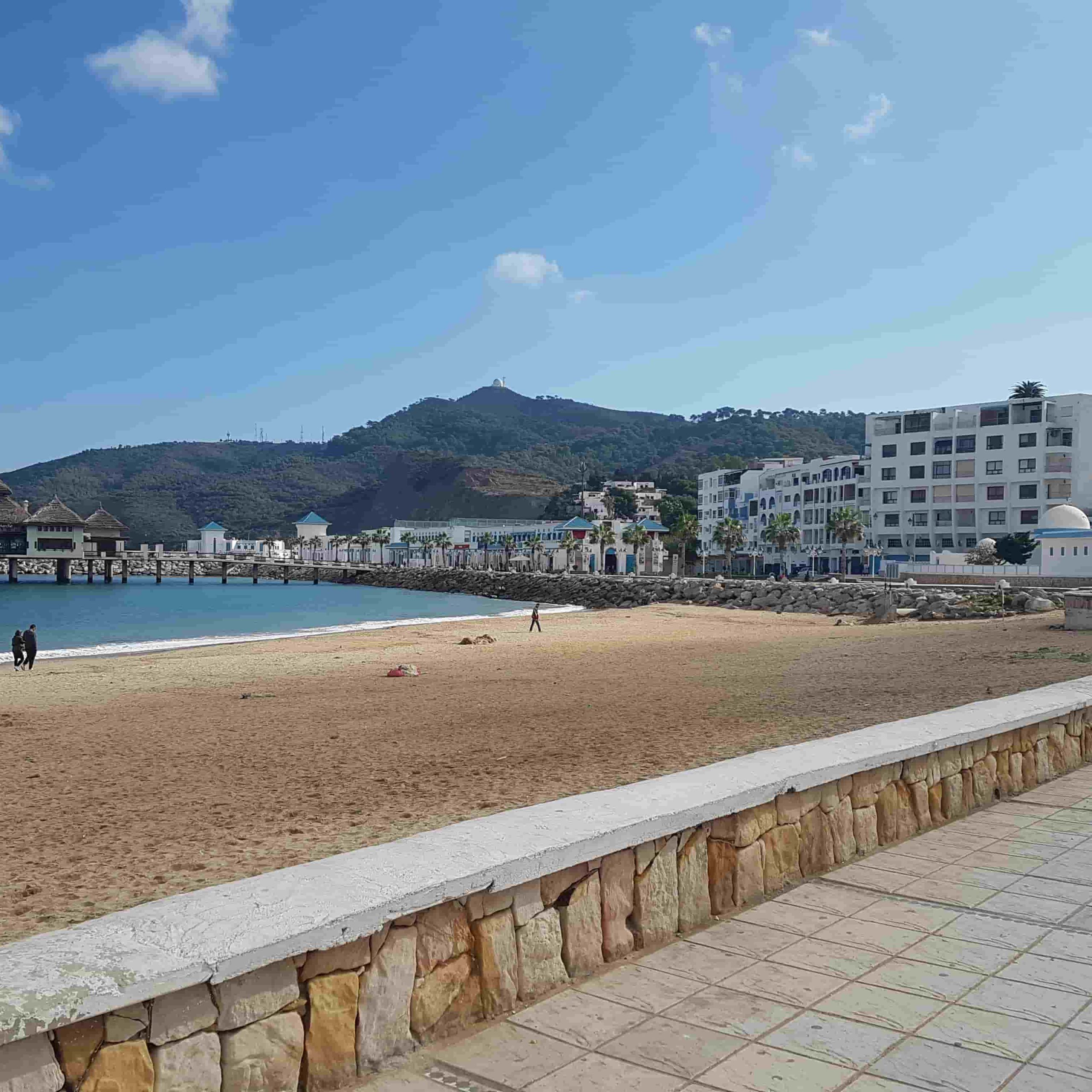
Just 15 minutes by car, the Martil Valley unfolds like a green sigh: citrus groves, olive terraces, and the gentle Martil River winding toward the sea. In summer, locals flock to its beaches—less commercial than Tangier’s, more family-oriented, with seafood grills sending woodsmoke into the air.
A little further, Cabo Negro offers upscale serenity: rugged cliffs, a historic lighthouse, and a world-class golf course nestled among cork oaks. But even here, authenticity holds strong—fishermen mend nets by hand, and cliffside cafés serve chermoula-grilled sardines with views stretching to Spain.
Back in the city, don’t leave without savoring Tetouan’s culinary signature: tajine tetouani—a delicate sweet-savory harmony of chicken, hard-boiled eggs, caramelized onions, raisins, and ras el hanout, all perfumed with orange blossom water. It’s Andalusia on a plate: refined, complex, unforgettable.
Why Tetouan Stays With You
Tetouan doesn’t shout. It doesn’t need to. Its power lies in nuance: the way afternoon light gilds a carved plaster arch, the rhythm of a grandmother’s hands rolling warqa dough for pastries, the pride in a young guide’s voice as he explains how his great-grandfather helped restore the medina in the 1980s.
It’s a city that rewards slowness. That honors memory. That proves Morocco’s richness isn’t only in its grand imperial capitals—but in its resilient, poetic, deeply human corners.
At Guide Me Around Morocco, we bring guests here not as sightseers, but as guests—invited into homes, studios, and stories. Because Tetouan, more than most places, reminds us: the most beautiful destinations aren’t just seen.
They’re felt.
— Abir
P.S. Tetouan is best paired with Chefchaouen or Asilah for a deeply cultural northern loop—away from the rush, close to the soul.
0 Comment