


By Abir, Founder & Lead Guide, Guide Me Around Morocco
When people imagine Morocco, the mind often conjures a vivid collage: golden dunes under a blazing sun, blue-washed alleyways in Chefchaouen, the labyrinthine energy of Marrakech’s Jemaa el-Fna, or perhaps a camel silhouette at sunset near Merzouga. These images are real—and breathtaking—but they’re only the cover of the story. The true magic of Morocco lies beneath the surface: in the laughter shared over a homemade tagine in a remote Berber village, in the quiet wisdom of a carpet weaver passing down centuries-old symbols through wool and color, in the scent of orange blossom rising from a hidden courtyard at dawn.
At Guide Me Around Morocco, we don’t just show you the country—we invite you to live it. And to do that, you must first understand why Morocco remains one of the world’s most compelling destinations—not because it fits neatly into a brochure, but because it resists easy definition. It is ancient and avant-garde, spiritual and exuberant, rugged and refined—all at once.
This article is not a checklist of must-see sites (though we’ll touch on those). Instead, it’s an invitation to see Morocco through new eyes: as a living tapestry of cultures, landscapes, and traditions—still vibrant, still evolving—and as a place where travel can be deeply personal, transformative, and regenerative—for both guest and host.
Where Continents Converge: Geography as Destiny
Morocco’s geography is its first storyteller. Nestled at the crossroads of Africa and Europe, with the Atlantic Ocean to the west and the Mediterranean to the north, it is a land of staggering contrasts compressed into a surprisingly compact space. In less than a day’s drive, you can journey from snow-capped peaks to arid desert, from wild Atlantic beaches to palm-fringed oases.
The Atlas Mountains—High, Middle, and Anti—cut diagonally across the country like a spine of stone and legend. They are home to the Amazigh (Berber) people, whose resilience and hospitality are as enduring as the peaks themselves. Trekking through villages like Imlil, Aït Bougmez (“The Happy Valley”), or the remote Mgoun region isn’t just about altitude gain; it’s about stepping into a rhythm of life unchanged for generations—where agriculture is vertical, water is sacred, and oral poetry is still recited by firelight.
To the south, the Sahara Desert begins—not abruptly, but gradually. The landscape softens, colors deepen into ochre and rust, and the silence grows profound. Erg Chebbi and Erg Chigaga, with their towering golden dunes, are iconic—but the real wonder lies in the hamadas (rocky plateaus), fossil-rich valleys near M’Hamid, and the oasis towns like Zagora and Skoura, where centuries-old ksour (fortified villages) and palmeraies whisper stories of caravans, saints, and survival.
Meanwhile, the coast—often overlooked—offers its own kind of magic. Essaouira, with its Portuguese ramparts and Gnawa rhythms, breathes with artistic freedom. Asilah dazzles in summer with murals and poetry festivals. And further south, near Sidi Ifni and Mirleft, wild, windswept cliffs meet empty beaches where surfers and solitude-seekers coexist.
This geographic diversity isn’t just scenic—it shapes culture, cuisine, architecture, and identity. A dish in Fez bears the imprint of Andalusian refinement; a melody in the Souss Valley carries sub-Saharan echoes; a door in Rabat reveals French Art Deco beside Islamic geometry. Morocco is not one culture, but many—layered, interwoven, and still in dialogue.
The Heartbeat of Travel: People, Not Places
Tourism in Morocco has boomed in recent decades—and with good reason. But mass tourism, if unchecked, risks flattening nuance into cliché. We’ve all seen the “Moroccan experience” reduced to a photo-op with a snake charmer, a rushed carpet sale, or a generic “desert tour” that drops hundreds of visitors at the same dune at sunset.
At Guide Me Around Morocco, we believe the most powerful experiences happen off-script—when human connection replaces transaction.
That means:
- Sharing mint tea with Fatima, a cooperative leader in the Ourika Valley, as she explains how argan oil is still pressed by hand—and how income from tourism helps send her daughters to university.
- Sitting beside Younes, a 72-year-old potter in Safi, as he shapes clay on a wheel turned by foot—not electricity—while recounting how his designs echo motifs from Roman-era ruins just kilometers away.
- Walking with Aïcha, a female shepherd in the High Atlas, as she leads her flock across alpine meadows, pointing out medicinal herbs and naming constellations in Tamazight.
These aren’t “performances.” They’re real lives—and when we design our trips, we ensure these encounters are reciprocal, respectful, and rooted in long-term relationships. We prioritize local guesthouses over international chains, community-run cooperatives over souvenir factories, and guides who are not just interpreters of sites, but bearers of stories.
This approach aligns with a growing global shift: travelers no longer want to consume a destination—they want to understand it. And Morocco, with its deep traditions of hospitality (l’karam), storytelling (hikayat), and communal life, is uniquely positioned to deliver that.
The Rise of Conscious & Curated Travel
Post-pandemic, the travel landscape has shifted decisively. According to the UNWTO, 83% of global travelers now consider sustainability an important factor in their choices. In Morocco, this translates into demand for:
- Slower itineraries (7+ days, not 3-day dashes)
- Smaller groups (max 6–8 people)
- Cultural immersion (cooking classes, artisan workshops, homestays)
- Eco-conscious operations (low-impact transport, waste reduction, support for reforestation in the Atlas)
- Gender-inclusive experiences (female guides, women-led initiatives—like our partnership with the Tawesna cooperative in the Ourika Valley)
We’ve seen this evolution firsthand. Five years ago, clients asked: “Can we see Marrakech, the desert, and Casablanca in 4 days?”
Today, they ask: “Can we spend two nights with a Berber family? Can we learn to bake bread in a communal oven? Can we meet the women behind the embroidery I’ll bring home?”
This is the future of Moroccan tourism—not just growth, but maturation. And it’s a future we’re proud to help shape.
Beyond Marrakech: Hidden Gems Worth the Detour
Let’s be honest: Marrakech is magnetic. Its energy is intoxicating. But relying solely on the “Imperial Cities” circuit (Marrakech–Fes–Meknes–Rabat) means missing Morocco’s quieter, deeper soul.
Here are a few places we love to include—often to our guests’ delighted surprise:
🔹 Tafraoute & the Anti-Atlas
Known for its surreal pink granite boulders painted by Belgian artist Jean Verame in the 1980s, this region is a geologist’s dream and a hiker’s paradise. But more than that, it’s home to Amazigh communities preserving ancestral agricultural techniques in near-desert conditions—growing almonds, figs, and barley in ingenious, water-wise terraces.
🔹 Moulay Idriss & Volubilis
Often skipped for the more famous Roman site of Volubilis itself, the sacred town of Moulay Idriss—Morocco’s holiest city after Mecca and Medina—offers a rare glimpse into spiritual Morocco. Perched dramatically between two hills, it’s a place of pilgrimage, quiet devotion, and stunning panoramic views.
🔹 The Middle Atlas & Cedar Forests
North of Azrou, ancient cedar forests shelter troops of Barbary macaques—Morocco’s only native primate. In winter, nearby Ifrane transforms into “Little Switzerland,” with snow-dusted chalets and crisp alpine air. This region is also where Amazigh New Year (Yennayer) is celebrated with feasts, music, and rituals honoring earth and ancestry.
🔹 Tata & the Draa Valley’s Deep South
Most tours turn back at Ouarzazate. But continuing south—past the fortified ksar of Aït Benhaddou and down the Draa River—reveals a greener, quieter Morocco: thousands of date palms swaying in the breeze, centuries-old irrigation systems (khettaras), and villages where time moves to the rhythm of the harvest, not the clock.
These aren’t “alternative” destinations—they’re essential ones. They remind us that Morocco is not a theme park of highlights, but a living country with depth, complexity, and quiet dignity.
The Role of the Guide: More Than an Interpreter
In Morocco, a guide is not just a navigator. They are cultural translators, storytellers, diplomats, and often, friends.
Abir—our founder—has been guiding for over 15 years. She’s walked every major trail, negotiated every medina alley, and built relationships across regions and generations. But more importantly, she listens. She reads the energy of a group. She knows when to linger over tea with a host, and when to give space for solitude on a dune at dawn. She adapts—because no two travelers are alike, and no two days in Morocco unfold the same way.
We train our guides rigorously—not just on history and geography, but on empathy, sustainability ethics, and intercultural sensitivity. They are all locally licensed, fluent in multiple languages (including Tamazight and Darija—Moroccan Arabic), and deeply committed to representing their country with honesty and pride—not as a museum, but as a dynamic, evolving home.
This human element is irreplaceable. Algorithms can’t replicate intuition. Apps can’t replicate trust. And no AI can replicate the moment a guest—tears in their eyes—tells Abir: “This trip changed how I see the world.”
Looking Ahead: Tourism with Integrity
Morocco’s tourism sector is projected to reach 20 million visitors annually by 2030. This brings opportunity—and responsibility.
We believe sustainable tourism isn’t about limiting access; it’s about deepening impact. That means:
- Training and employing local women as guides and drivers (still rare, but growing—we’re proud to be part of that shift).
- Partnering with eco-lodges powered by solar energy and using greywater systems.
- Donating 2% of annual profits to the Association Aït Baamrane—supporting girls’ education in remote southern villages.
- Advocating for policies that protect fragile ecosystems (like the endangered argan forests) from overdevelopment.
Tourism, at its best, should leave a place better than it was found—not just economically, but socially and environmentally.
Your Invitation
Morocco doesn’t reveal itself all at once. It asks for patience. Curiosity. An open heart. It rewards those who wander off the main square, who accept the third cup of tea, who learn to say shukran (thank you) not just with words, but with presence.
At Guide Me Around Morocco, we don’t sell trips.
We co-create journeys—crafted by hand, guided by heart, and rooted in respect.
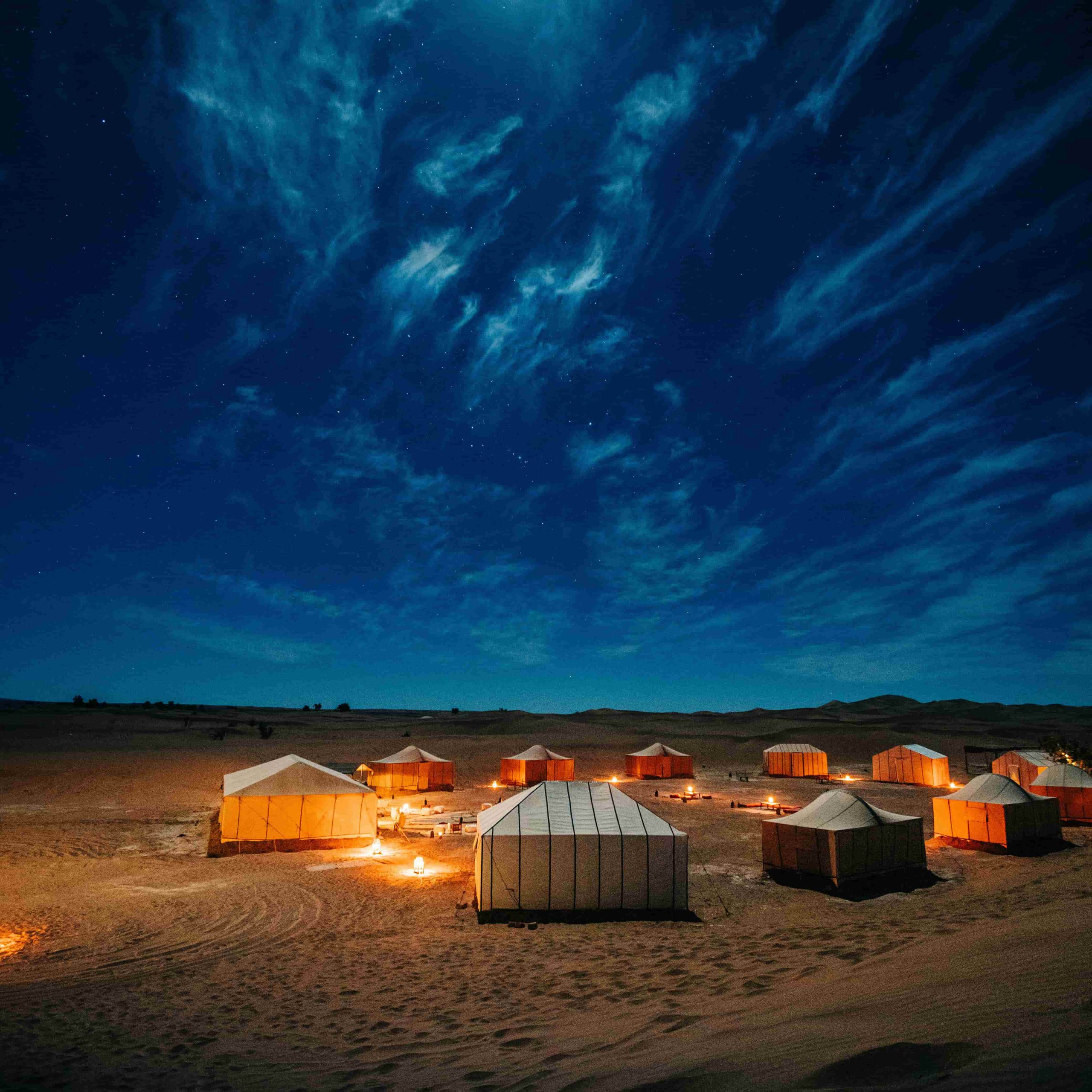
Whether you dream of sleeping under a canopy of stars in the Erg Chebbi, learning the secrets of Fassi cuisine in a family dar, or tracing ancient trade routes on foot through the High Atlas—we’re here to shape that dream into reality.
Because Morocco isn’t just a destination.
It’s a feeling. A memory waiting to be lived.
Ready to write your chapter?
Let’s begin—bismillah, with intention, and with joy.
— Abir
Founder, Guide Me Around Morocco
Casablanca, Morocco
P.S. Every trip we design is fully customizable. Tell us your pace, your passions, your questions—we’ll handle the rest.
0 Comment